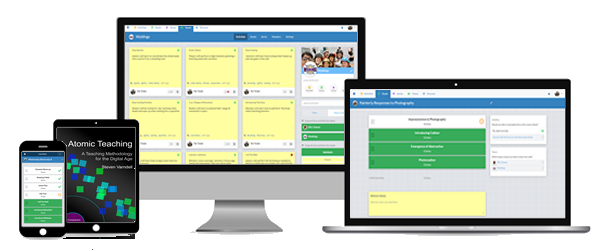

LessonStack is a free lesson planning tool!
Sign up to start dragging and dropping activities into your lesson plans!
Sign up - it's Free!Already a member: Login

120mins
I skate, train, and ref at Rotterdam Roller Derby as Cherry Bombe #47 since 2022. Before that I skated at The Parliament of Pain The Hague Roller Derby. Have been skating since 2014. I love using LessonStack to write out drills and trainings and share
Sign up to start dragging and dropping activities into your lesson plans!
Sign up - it's Free!Already a member: Login

15
mins
Skaters will skate around a track, doing:
slalom
squats
side-to-side lunges
bum kicks
toe-touch kicks
drunken sailors/crossovers
rotating arms
jog on toe-stops
jog on skates
Dynamic stretch:
Credits: this warm-up and dynamic stretch routine are based on a more detailled plan from our trainer Sterroids
Ask skaters if they are warm
15
mins
Make groups of 3-5 skaters.
First variation
Place half of the group on one side of the hall, and one half on the other.
When the couch blows a whistle, they sprint towards the other side, then tap their team-mate's hand. Their teammate then sprints back, and taps the next person.
Second variation
Skaters form a line on one hand of the hall.
Etc. Until all skaters are at the end of the hall.
10
mins
This is an endurance exercise where skaters sprint for a certain amount of time, then skate leisurely for the same amount of time, in a circle around the hall:
10
mins
All skaters stand on one side of your training space.
On a signal (whistle) they power start, skate to the other side (10-30m away) as fast as possible, then break and wait there for the next whistle.
During the first three minutes, give them time to have a few seconds of rest in between. You can instruct them to do different kinds of power starts, for example:
Tip: for beginners who have not mastered power starts yet, take more time to explain the different power-starts, and maybe start with just one type. Make sure skaters "lean-in" to the start (by letting themselves "fall forward", turning it into a run instead of a walk). Also make sure skaters get a little air-time inbetween steps. Make sure skaters can take small steps and large steps.
During the next three minutes, speed it up: give skaters júst enough time to reach the other side and be ready to go again. Do this in intervals: three times 30sec. up, 10sec. rest.
During the last three minutes, let skaters do this at their own fastest pace: give them a fixed number of times (for example, 10) to get from one side to the other side, and have them "race" to be the first one done. You can do multiple races.
Tip: for advanced skaters, you can mandate one or another type of stop they will have to do at the end of their lane (plough stop, turn-around-toe-stop, hockey stop, etc.)
Skaters will be able to skate fast and stable from side-to-side.
5
mins
Skaters find a place on the track, with 10ft. free behind them and 10ft. free in front of them.
First, the trainer (or, if you want to work on communication and interaction, the skaters) will call out the lanes 1-2-3-4 in any order, and the skaters move to this lane. You can add a HIIT element by doing this for 30sec. then 10sec. rest. (2min)
Next, the skaters will pick a buddy. One stands 10ft. in front of the other. The skater in the back goes to the lane they want, and the skater in front follows their movements. You can add a contact element by having the skaters be close. (2min)
Skaters will be able to follow their buddy perfectly.
15
mins
Set-up: Divide the track into lanes 1, 2, 3 and 4.
Drill: Skaters will first do a quick round of regular laterals.* Trainer calls out numbers of lanes in any order they want, and skaters move laterally to those lanes. Add a HIIT element by going 1min. "up", 15sec. "down".
Then, skaters will do "fast laterals" at their own pace, moving between lanes 1 and 4.
Last, skaters will do laterals while the trainer calls out lanes. They have to decide themselves whether they want to use a fast or a regular lateral: whichever gets them there the fastest. In general, long distances are faster with fast laterals, and short distances with regular laterals.
Explanation fast laterals For a fast lateral, skaters have two options.
The first option uses an edge stop to stop:
The second option uses a forceful step to stop:
*If your skaters haven't mastered regular laterals yet, have them practice those more first.
Skaters will be able to move fast between lanes on command.
10
mins
Set up squares of cones around the hall/track. On the whistle, skaters will do a power start (fast start), skate to the next square, then stop there within the square, using a plough stop (or a different kind of stop you'd like to have them practice).
The squares to stop in will become smaller and smaller, until they have just enough space for one per
15
mins
Set up:

Skater starts 15ft. behind the back "wall", does a fast start, and comes to a stop (plough or hockey stop or even another kind of stop, depending on skater level and team focus) (1). Skater then moves laterally to get to the "gap" on the side of the wall (2), does another fast start, and stops behind the second "wall" (3). Skater then skates/turns/moves around this smaller "wall" and skates off (4).
NB: this drill is meant for both jammers and blockers who have to manouvre around an initial wall, then get somewhere fast (either to pass that last blocker, or to stop a jammer)
Skaters will have mastered this drill when:
10
mins
Skaters form a paceline or pack. They than have to follow directions, but ONLY if you say "Simon Says" before giving the instruction.
Tip: you can make it "ref says" or "trainer says" or "coach says" to teach skaters to listen to the refs/trainers/coaches!
Instructions you can give are, for example:
10
mins
Let the skaters skate round on the track, guiding them through a light stretch routine, while they focus on their breathing.
For example this grocery-shop themed one:
Assessment of own goals: Skating partners discuss with each other what their goals were for this training, and how it went with those goals. They have to each name: one thing that went well, one thing they'd like to improve on the next training.
Skaters will have mastered this when: