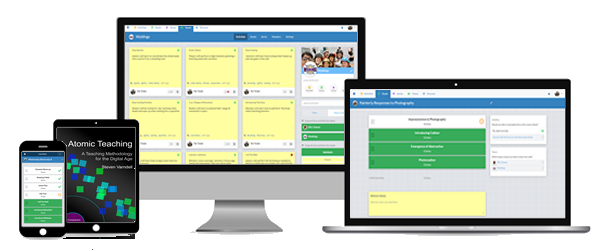

LessonStack is a free lesson planning tool!
Sign up to start dragging and dropping activities into your lesson plans!
Sign up - it's Free!Already a member: Login

90mins
A very chaotic small league in the middle of nowhere (Brno)
Sign up to start dragging and dropping activities into your lesson plans!
Sign up - it's Free!Already a member: Login

15
mins
Skaters will skate around a track, doing:
slalom
squats
side-to-side lunges
bum kicks
toe-touch kicks
drunken sailors/crossovers
rotating arms
jog on toe-stops
jog on skates
Dynamic stretch:
Credits: this warm-up and dynamic stretch routine are based on a more detailled plan from our trainer Sterroids
Ask skaters if they are warm
5
mins
Skaters find a place on the track, with 10ft. free behind them and 10ft. free in front of them.
First, the trainer (or, if you want to work on communication and interaction, the skaters) will call out the lanes 1-2-3-4 in any order, and the skaters move to this lane. You can add a HIIT element by doing this for 30sec. then 10sec. rest. (2min)
Next, the skaters will pick a buddy. One stands 10ft. in front of the other. The skater in the back goes to the lane they want, and the skater in front follows their movements. You can add a contact element by having the skaters be close. (2min)
Skaters will be able to follow their buddy perfectly.
10
mins
Skaters will learn to pass a blocker on the outside of the track, in the corner, using a bean-dip. To practice you can set up an obstacle where the blocker would be:
Skaters will then practice bean-dips to pass this "blocker". See video below for more instructions.
10
mins
While having high speed, skaters transition to backwards skating and stop with their toe stops.
However, they don't have to have squared hips, and always be perfectly perpendicular to the inside line.
Skaters don't even have to come to a complete stop, but might use it to slow down and move on. Especially moving on after initiating this move, might confuse the opposition.
Remind them that it's not about stopping immediatly - we are practicing having control over the stopping distance. The next steps will get more and more advanced.
Skaters will be comfortable
5
mins
All skaters stand on one side of your training space.
On a signal (whistle) they power start, skate to the other side (10-30m away) as fast as possible, then break and wait there for the next whistle.
During the first two minutes, give them time to have a few seconds of rest in between. You can instruct them to do different kinds of power starts, for example:
Tip: for beginners who have not mastered power starts yet, take more time to explain the different power-starts, and maybe start with just one type. Make sure skaters "lean-in" to the start (by letting themselves "fall forward", turning it into a run instead of a walk). Also make sure skaters get a little air-time inbetween steps. Make sure skaters can take small steps and large steps.
During the next two minutes, speed it up: give skaters júst enough time to reach the other side and be ready to go again. Do this in intervals: three times 30sec. up, 10sec. rest.
During the last minute, let skaters do this at their own fastest pace: give them a fixed number of times (for example, 10) to get from one side to the other side, and have them "race" to be the first one done.
Tip: for advanced skaters, you can mandate one or another type of stop they will have to do at the end of their lane (plough stop, turn-around-toe-stop, hockey stop, etc.)
Students will get faster and faster at this drill.
10
mins
Set-up:
Skaters will perform apex jumps.
Something that might help with these jumps is to "count" the steps until the jump in your head: this will help with ending up with the right leg in the right position in the end. In addition, skaters can come skating at a moderate pace, then use their last 2-4 small powerfull strides to really get the speed they need for the jump.
Level-up with contact: Once skaters are ready, put a skater at the apex and have them hit (first softly, then harder) the skater in the air, or have them extend an arm so that the jammer can feel what it's like to make contact mid-air. (Please be mindful of the fact that intentionally hitting another skater while jumping is illegal and dangerous!)
10
mins
Skaters will place themself back and forth on the inside or outside of the track and leave some space for a teammate to pass them. The skater last in line will start passing the other skaters in the gappbetween them and the outside line. Passing can be done in multiple ways:
A skater can quickly pass there teammates from theinside to the outside of the track.
10
mins
In this simple but challenging exercise, the coach will use a tabata timing method to time players working in groups of 3/2 blockers and 1 jammer.
Tabata timing is 20 seconds work to 10 seconds rest for a total of 4 minutes.
For the 20 seconds work, the jammer works the wall constantly - if they get thru, they immediately turn around and start working it the other way. There should be no stops in that 20 seconds - keep that work rate high.
This work rate pushes the body to burn all of its aerobic resources and work anaerobically. It's a very tough 4 minutes when performed correctly.
The coach should time this, blowing a whistle for each interval.
Some notes on blowing the whistle: warn the players when work is about to start - I usually count down from 3 - 2- 1 - Go! This will ensure they start on time
Do NOT warn them that play is about to finish. Players will naturally relax when they hear the signal that time is nearly up, and we want them to be working for the full 20 seconds
Equipment
I use the Android Tabata app found here: https://play.google.com/store/apps/details?id=com.evgeniysharafan.tabatatimer&hl=en_GB
In this drill we want players to move thru the discomfort of being tired, the coach should be on the work rate as much as possible.
Players should be visibly tired after completing this drill.
15
mins
The jammer starts behind the jammer line with one blocker in front of them to pass. The jammer get 20 seconds from impact or passing the first blocker to get out of the pack. When the jammer gets out of the pack a new blocker will be added to spice up the difficulty for the Jammer. So with every pass the amount of blockers increase. If the jammer makes a penalty they can still go on, but there is no new blocker added to the pack.
Getting the highest amount of blockers on track is a way to test yourself or compete with your fellow skaters.
